For most lawns in the Capital Region, mulching leaves with your mower is the best option. It’s fast, it feeds your soil, and it keeps leaves out of the landfill. A light scattering of leaves can be left alone, but a thick layer should never sit on your grass all winter. Bagging is the right call when leaves pile up faster than you can mulch them, or when they’re wet, matted, or diseased.
That’s the short version. Here in Clifton Park, Saratoga, and across Upstate New York, where big maples and oaks can drop several inches of leaves in a matter of weeks, the details matter. Let’s look at each option and when it makes sense.
Can You Leave Leaves on the Lawn Over Winter?
You can leave a thin layer of leaves on your lawn, but not a thick one. A good test: if you can still see plenty of grass through the leaves, you’re fine. If the leaves form a solid blanket, they need to go.
A heavy layer of leaves blocks sunlight and traps moisture against the grass. Once snow piles on top, those leaves get packed into a wet, matted layer that can smother turf and create ideal conditions for snow mold, the gray or pink patches many Capital Region homeowners find in spring. Matted leaves also give voles and other critters cover to tunnel through your lawn under the snow.
The “leave the leaves” movement does have a point, though. Leaves are valuable habitat for pollinators and beneficial insects. The best place to leave them is in garden beds, around shrubs, and in naturalized corners of the yard, rather than on top of your grass.
Is Mulching Leaves With a Mower Good for Your Lawn?
Yes. Mulching shreds leaves into small pieces that fall between grass blades, break down over the winter, and return organic matter and nutrients to the soil. Done right, it’s one of the easiest ways to improve your lawn while getting your fall cleanup done.
To mulch leaves effectively:
- Mow when leaves are dry. Dry leaves shred cleanly. Wet leaves clump and can clog the mower deck.
- Mow often. Mulching works best when the leaf layer is a few inches deep or less. Once a week during peak drop is a good rhythm.
- Use a mulching blade if you have one. A standard blade works, but a mulching blade chops leaves finer and faster.
- Aim for dime-sized pieces. If you can still see big leaf fragments sitting on top of the grass, make a second pass.
Mulching also pairs well with your other fall lawn tasks. Shredded leaves can be raked into garden beds as a free winter mulch, and the same mowing passes help you step your grass height down before the final cut of the season.
When Should You Bag or Remove Leaves Instead?
Bag or remove leaves when there are simply too many to mulch, or when the leaves themselves could cause problems. Situations where removal is the better choice:
- Heavy leaf drop. If your yard sits under several mature trees, mulching everything can leave too much material on the lawn, even after shredding.
- Wet, matted leaves. Leaves that have already packed down after rain are hard to mulch and will keep smothering the grass.
- Oak leaves in large amounts. Oak leaves are tough and slow to break down, so big piles of them are often better removed or composted.
- Diseased leaves. Leaves with heavy leaf spot or tar spot, common on maples, are better bagged than left to sit near the trees.
- Before the first snow. If snow is in the forecast and the lawn is still buried, removal is the fastest way to protect your grass.
Bagged leaves don’t have to go to waste. Add them to a compost pile, or check with your town about fall leaf collection and drop-off options.
Mulch, Bag, or Leave: Which Option Is Right for Your Yard?
The right choice depends on how many leaves you have and where they’ve landed:
| Option | Best when | Benefits | Drawbacks |
|---|---|---|---|
| Mulch | Light to moderate leaf cover on the lawn | Feeds the soil, saves time, no bags | Needs dry leaves and frequent mowing |
| Bag | Heavy, wet, matted, or diseased leaves | Clears the lawn completely before snow | More labor, more bags to dispose of |
| Leave | A thin scattering on grass, or leaves in beds | Supports pollinators, zero effort | Thick layers smother grass and invite snow mold |
Many yards end up using all three: mulch the lawn, bag the overflow, and leave a layer in the garden beds.
Frequently Asked Questions
Is it bad to leave leaves on the grass all winter? A thick layer is. It blocks light, traps moisture, and can lead to snow mold and dead patches in spring. A light scattering where grass still shows through is fine.
Do mulched leaves act as fertilizer? Mulched leaves add organic matter and some nutrients as they break down, which helps soil health. They don’t replace a fall fertilizer application, but they complement it.
How often should I mulch leaves in the fall? About once a week during peak leaf drop, which in the Capital Region usually runs from mid-October into early November.
Can I mulch wet leaves? It’s possible, but not ideal. Wet leaves clump and clog the mower. Wait for a dry afternoon when you can.
When should leaf cleanup be finished? Try to clear or mulch the lawn before the first lasting snowfall, so leaves don’t get trapped against the grass all winter.
Let JP’s Cutting Edge Handle Your Fall Leaf Cleanup
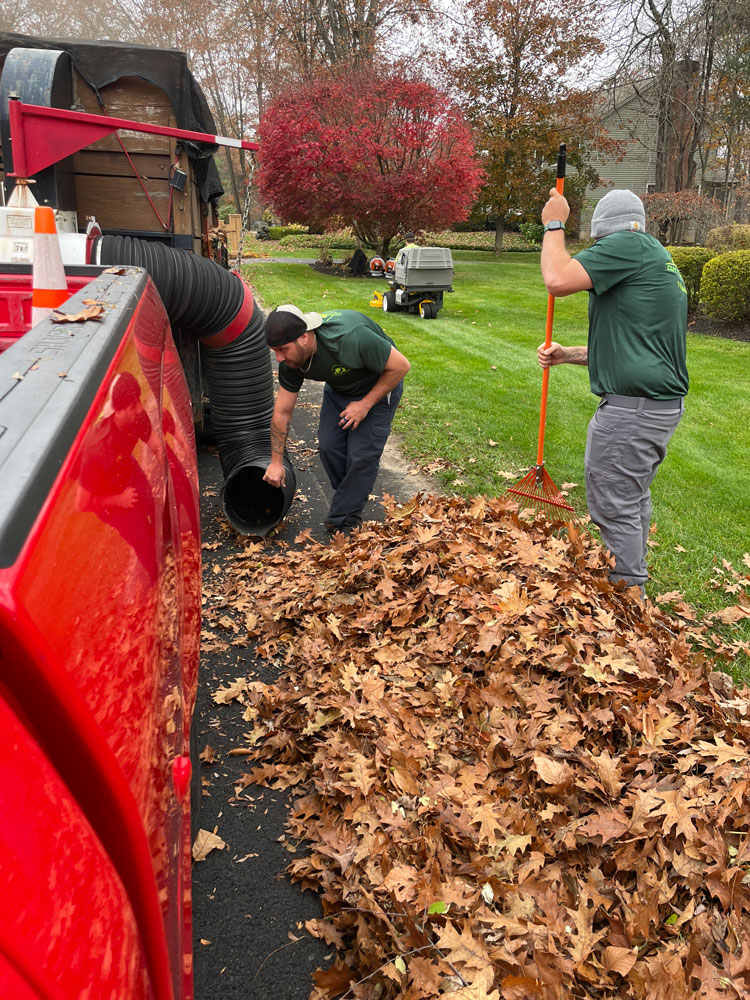
Whether your yard needs a few mulching passes or a full haul-away, getting leaves off the lawn before snow is one of the best things you can do for a healthy spring. JP’s Cutting Edge provides fall cleanups for homes in Clifton Park and across the Capital Region, so you can skip the raking and bagging this year.
Running out of time before the snow? Contact JP’s Cutting Edge to schedule your fall leaf cleanup today.