Most homeowners in the Capital Region treat the last mow of the year like a chore to check off before the snow shovel comes out. Fire up the mower one more time, give the yard a quick pass, and park it in the garage until April.
But here’s the thing: that final cut does a lot more work than you’d think. The height you leave your grass at heading into winter has a real effect on how your lawn looks when the snow finally melts. Cut it wrong, and you could be staring at matted gray patches, vole tunnels, or thin, struggling turf come spring.
The good news is that getting it right is easy once you know what you’re aiming for. Let’s break it down.
The Short Answer: Aim for 2 to 2.5 Inches
For most lawns in Upstate New York, the sweet spot for the final mow is about 2 to 2.5 inches.
That’s a little shorter than you’d keep your grass during the summer, when 3 to 3.5 inches is ideal for shading out weeds and holding moisture. But it’s not a buzz cut, either. You want the grass short enough that it won’t flop over and mat down under the snow, and long enough that it still has the energy reserves to make it through a long, cold winter.
Lawns around Clifton Park, Saratoga Springs, and the rest of the Capital Region are mostly cool-season grasses like Kentucky bluegrass, perennial ryegrass, and fescues. These grasses handle that 2 to 2.5 inch range really well going into dormancy.
Why Too Long Is a Problem
It’s tempting to skip the last mow and let the grass go into winter a little shaggy. After all, more grass means more protection, right? Not really.
Long grass tends to fold over and mat down once heavy snow sits on it for weeks. That damp, matted layer is the perfect environment for snow mold, a fungus that shows up in spring as gray or pinkish circular patches. It’s one of the most common spring lawn complaints we hear in the Capital Region, and a lot of it traces back to grass that went into winter too tall.
Long grass also gives voles great cover. These small rodents tunnel along the surface of your lawn under the snow, chewing grass as they go. When the snow melts, you’re left with winding, dead trails across the yard.
Why Too Short Is Also a Problem
On the flip side, some homeowners figure they’ll scalp the lawn down low and be done with it. That can backfire, too.
Cutting too short exposes the crown of the grass plant, the growing point right near the soil. The crown is what keeps your grass alive through winter, and when it’s left unprotected, it’s more likely to dry out or get damaged by freezing temperatures and harsh winds. Grass cut too short also has less leaf surface to store energy, so it comes out of winter weaker and slower to green up. And thin, stressed turf in spring is an open invitation for weeds and crabgrass.
When Should You Do the Last Mow in Upstate NY?
There’s no single date on the calendar, but for most Capital Region lawns, the last mow falls somewhere between late October and mid-November.
The better signal is the grass itself. Cool-season grass slows way down once daytime highs stay consistently below about 50 degrees. When you notice you’re mowing less and less, and the lawn barely seems to grow between cuts, you’re getting close.
A good rule of thumb: keep mowing as long as the grass keeps growing. Stopping too early in a mild fall can leave you with a lawn that’s shot up to 4 inches by the time the first real snow arrives, which puts you right back in snow mold territory.
Step It Down Gradually
If your grass has been sitting at 3.5 inches all summer, don’t drop it straight to 2 inches in one pass. That’s a shock to the plant.
Instead, lower your mower deck a notch every mow or two through October. Stick with the classic one-third rule: never remove more than a third of the grass blade in a single cut. By the time you reach your final mow, you’ll be right in that 2 to 2.5 inch range without stressing the lawn.
A Few More End-of-Season Tasks
While you’re giving the lawn its last trim, it’s a great time to knock out a few other fall jobs:
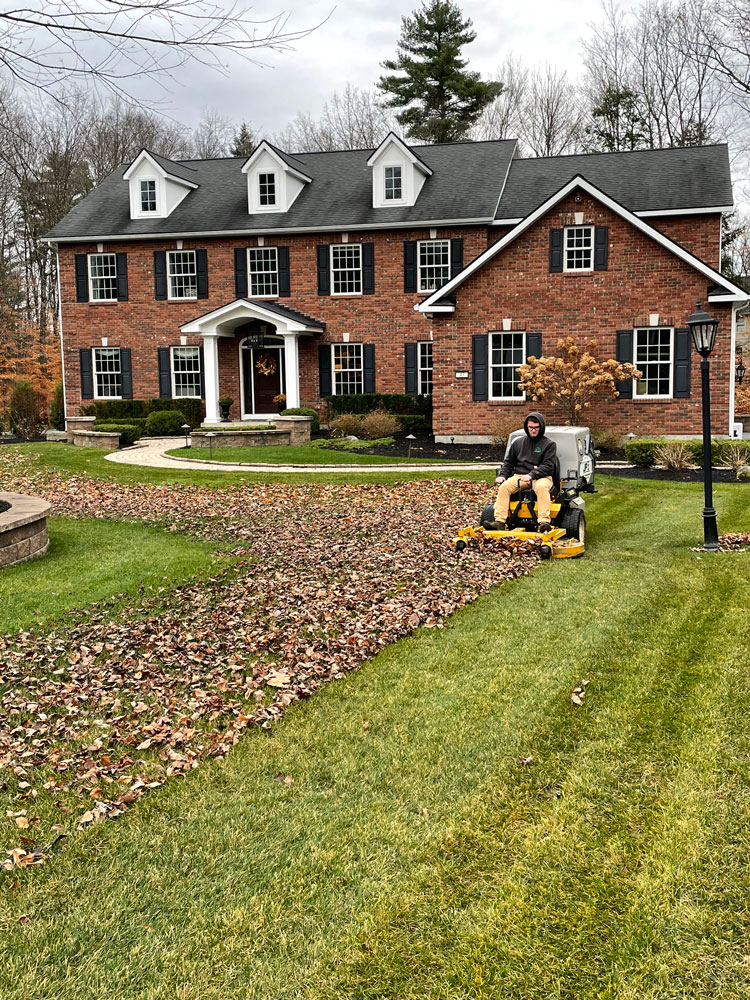
- Clear the leaves. A layer of wet leaves left on the lawn smothers the grass and causes the same matting problems as tall grass. Mulch them with the mower or remove them before the snow flies.
- Sharpen your blades. A dull blade tears grass instead of cutting it cleanly, leaving ragged tips that are more prone to disease.
- Consider a late-fall fertilizer. A final feeding in fall helps your grass store up energy for a stronger spring green-up.
- Winterize your mower. Add fuel stabilizer or run the tank dry, clean the deck, and store it somewhere dry.
Common Last-Mow Mistakes to Avoid
We see these every fall around the Capital Region:
- Mowing frosty grass. Frozen blades snap and bruise under foot traffic and mower wheels. Wait until the frost burns off in the late morning.
- Mowing when it’s soaking wet. Wet grass clumps, cuts unevenly, and can leave ruts in soft fall soil.
- Calling it quits in early October. A warm stretch can push a surprising amount of growth. Keep an eye on it until growth truly stops.
- Forgetting the edges. Tall grass along fences, beds, and foundations is prime vole real estate. Give those spots a trim, too.
Let JP’s Cutting Edge Handle the Last Mow
Getting the final cut right is one of the simplest things you can do to set your lawn up for a great spring. But between shorter days, falling leaves, and everything else on your fall to-do list, we get it if you’d rather hand it off.
At JP’s Cutting Edge, we take care of lawns all over Clifton Park and the Capital Region, and we know exactly how to get them ready for an Upstate New York winter. From the final mow and leaf cleanup to fall fertilization, we’ll make sure your lawn heads into the cold season in top shape.
Ready to wrap up the season the right way? Contact JP’s Cutting Edge today to schedule your fall cleanup.