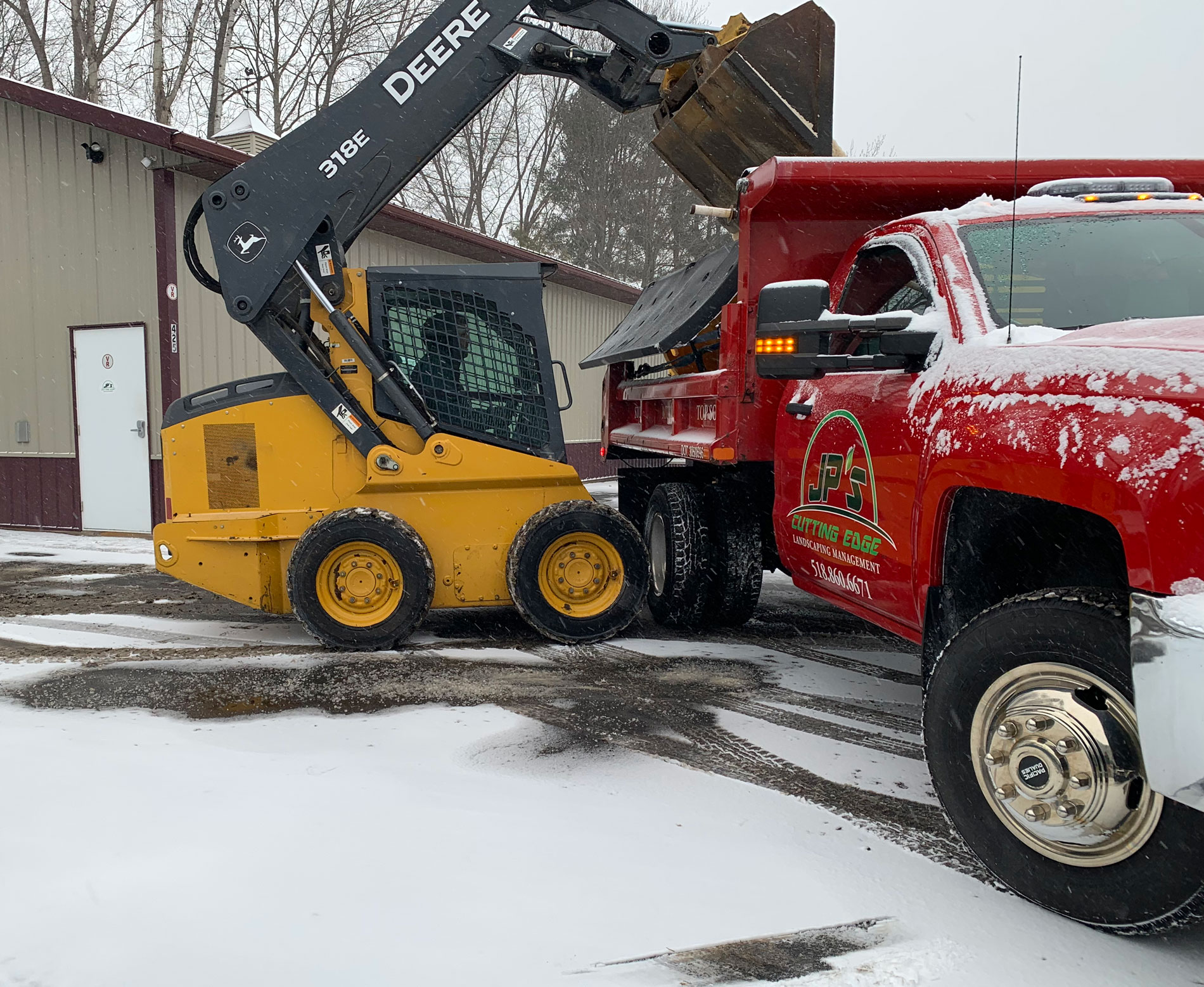
If you manage a commercial property in the Capital Region, late summer is the right time to line up snow removal for the coming winter — not November, and definitely not the week of the first storm. Snow contractors build their winter routes months in advance, and the properties that get priority service are the ones already under contract. By the time the forecast turns, you’re choosing from whatever capacity is left.
Here’s why booking early matters more for commercial properties than most owners and managers realize — and what you should have settled before the ground freezes.
Why Would Anyone Be Thinking About Snow in August?
Because commercial snow removal isn’t a service you buy on demand. It’s a route.
A plow contractor commits specific trucks, drivers, and hours to a fixed geographic loop. Every property on that loop has a place in the sequence — the medical building that needs a clear lot by 6:30 a.m., the apartment community whose residents leave before dawn, the retail plaza that opens at ten. Those decisions get made in the fall, not during a storm at 3 a.m.
Once a route is full, it’s full. Properties that sign early get slotted in where it makes operational sense. Properties that call in December get fit in wherever there’s a gap, if there’s a gap at all.
What Does Waiting Actually Cost a Commercial Property?
The risk isn’t just a messy parking lot. For commercial properties, delayed snow response shows up on the balance sheet in four ways.
- Lost revenue and access. If your lot isn’t cleared by the time your tenants open, customers go somewhere that is. For a strip mall or boutique, a single unplowed Saturday in December is a meaningful chunk of the month.
- Liability exposure. Slip-and-fall claims are one of the most common winter losses for commercial property owners. When a claim comes, your insurer and the plaintiff’s attorney will both ask the same question: what was your snow and ice plan, and can you document that it was followed?
- Emergency pricing. Last-minute, no-contract work is priced as last-minute, no-contract work. Locking in terms ahead of the season means you know your winter number when you’re building next year’s operating budget.
- No say in priority. Contract customers get sequenced. Everyone else gets whatever’s left after the contracts are cleared.
Which Commercial Properties Should Be Planning Now?
Every commercial property benefits from a plan, but a few types have constraints that are much harder to solve on short notice.
Apartment Communities and Multifamily Properties
You’re managing resident egress before sunrise, fire lane access, accessible parking and walkway routes, and — the one that catches people — snow storage. Multifamily lots are often built out to the property line with little green space to push snow into. Deciding in September where the piles go is far easier than improvising during a twelve-inch storm.
Retail Plazas and Strip Malls
Shared lots with multiple tenants mean staggered opening times, competing expectations, and lease language that splits responsibility between landlord and tenant in ways that aren’t always obvious. Sorting out who is responsible for the sidewalk in front of each unit — and making sure it’s actually assigned to someone — is a conversation for early fall.
Boutiques and Standalone Storefronts
A small footprint doesn’t mean a small problem. Twenty feet of unshoveled sidewalk is the difference between browsers wandering in and browsers walking past. Many Capital Region municipalities also place sidewalk clearing responsibility on the property owner within a set window after snowfall, which makes reliable service a compliance question, not just a convenience.
Office, Medical, and Professional Buildings
Early appointments, delivery windows, and employee parking all depend on the lot being open at a predictable hour. These properties usually need the tightest service window on the route — which is exactly the slot that fills first.
What Should a Commercial Snow Agreement Cover?
Before you sign anything, make sure these six items are spelled out in writing rather than assumed.
- Trigger depth. How much accumulation initiates service — two inches is common, but properties with heavy foot traffic often want a lower threshold.
- Service window and priority. What time your property is cleared by, and where you sit in the route sequence.
- Ice management. Whether pre-treatment is included, what de-icing materials are used, and how refreeze is handled after the plow leaves.
- Snow storage. Where piles are placed so they don’t block sight lines, bury accessible spaces, or melt across a walkway and refreeze overnight.
- Documentation. Service records with dates, times, and materials applied — your first line of defense if a claim is filed.
- Billing structure. Per-push, seasonal, or hourly, and what triggers additional charges during extended events.
Why a Site Walk in September Beats One in December
The most useful work in a snow contract happens on bare ground. Walking a property in early fall lets a contractor find and mark everything that disappears under snow: curb edges, landscape islands, catch basins and drains, hydrants, dumpster corrals, EV charging bollards, and low branches that will catch a truck.
It’s also when you can look at drainage honestly — where meltwater runs, where it pools, and which walkway turns into a sheet of ice at seven in the morning. Once that first storm hits, none of it is visible and all of it is guesswork.
What to Do This Month
- Pull your lease agreements and confirm who is responsible for lots, walkways, and sidewalks at each property.
- Review last winter honestly: what was late, what got missed, what generated complaints or a claim.
- Request proposals now, while contractors still have route capacity and time to walk your site.
- Verify insurance certificates before you commit, not after the first storm.
- Get the plan in writing — trigger depth, timing, de-icing, snow storage, and documentation.
Frequently Asked Questions
When should a commercial property sign a snow removal contract in Upstate New York?
Late summer through early fall is ideal. Most contractors finalize winter routes well before the first snowfall, so properties that commit in August, September, or October have the best chance of getting the service window they actually need.
Does JP’s Cutting Edge handle apartment complexes and retail properties?
Yes. JP’s Cutting Edge provides commercial snow and ice management for businesses and managed properties in Clifton Park, Halfmoon, Malta, Rexford, and surrounding Capital Region communities — including multifamily communities, retail plazas, storefronts, and office and professional buildings.
What’s typically included in commercial snow management?
Plowing parking areas, clearing walkways and building entrances, applying de-icing materials, planning snow pile placement, and post-storm inspection. Service records and liability documentation should be part of the package as well.
Is a snow contract worth it for a small business with one storefront?
Yes. Smaller properties often carry the same sidewalk clearing obligations and the same slip-and-fall exposure as larger ones, with fewer staff available to handle it. A contract simply means it’s covered before you open.
| Ready to Get Your Property on the Winter Route? JP’s Cutting Edge provides commercial snow removal and ice management throughout Clifton Park, Halfmoon, Malta, Rexford, and the surrounding Capital Region. Our trucks and plows keep your parking lots open, your walkways safe, and your doors ready for business — so you can focus on running it. Request your free consultation today and lock in your spot before the season fills up. Call: 518-860-6671 Email: info@jpscuttingedge.com Visit: jpscuttingedge.com Office: 425 Route 146, Clifton Park, NY 12065 |